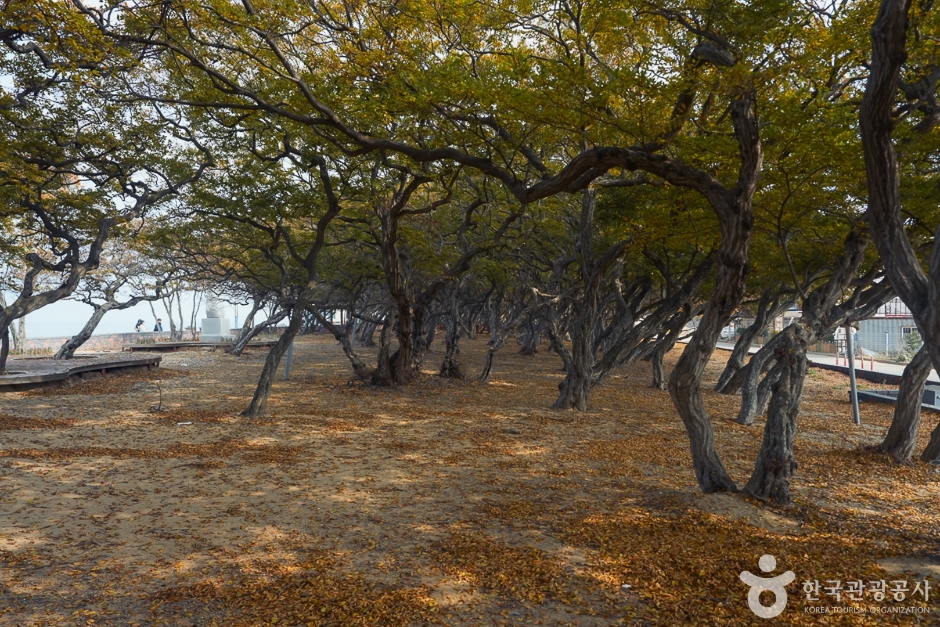
Hornbeam Habitat (서어나무(소사나무)군락지)
2024-02-16
Nae-ri, Yeongheung-myeon, Ongjin-gun, Incheon
Hornbeam Habitat stands as the largest colony of hornbeam trees in Korea, home to over 350 trees that have surpassed the 150-year mark. These trees were initially planted by the residents of Naeri village to shield their rice fields from the harsh impacts of rain and wind. Subjected to the relentless sea breeze, the branches of these hornbeam trees have been sculpted by nature to twist and turn, veering away from the typical straight growth pattern. This interaction between the natural elements and the trees' adaptive growth has resulted in a landscape of unique beauty.
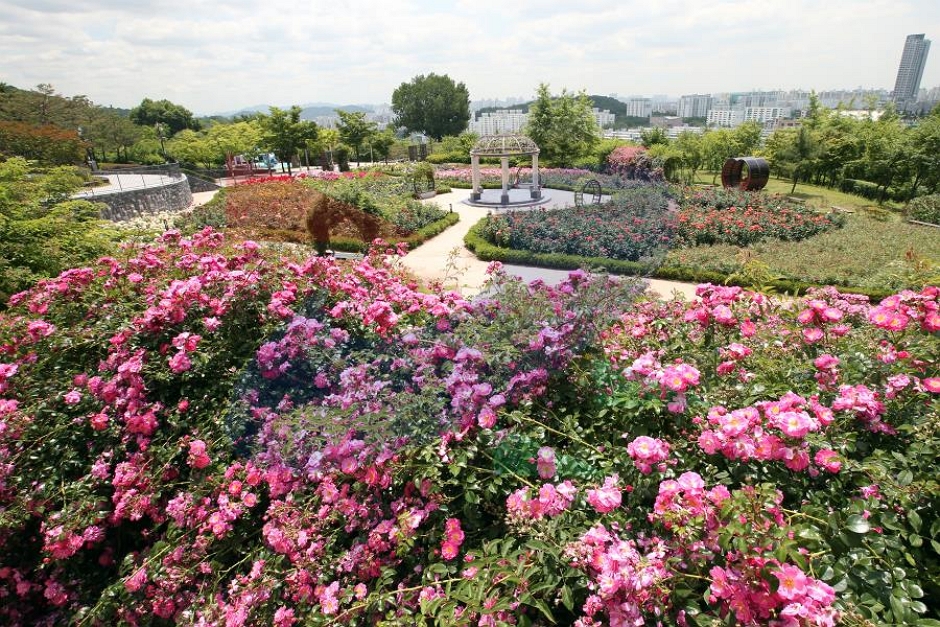
Munhak Rose Park (장미공원)
2024-02-15
인천 연수구 연수동 137-40
Munhak Rose Park is situated at the base of Munhaksan Mountain. The park features a central rose garden boasting over 40 varieties of roses, alongside a pond, a lawn area, and multi-purpose sports facilities. It includes several photo zones, such as a rose-adorned staircase with trick art, a porch evoking a European garden, and an arched bench embellished with roses. The roses are in full bloom during May and June.
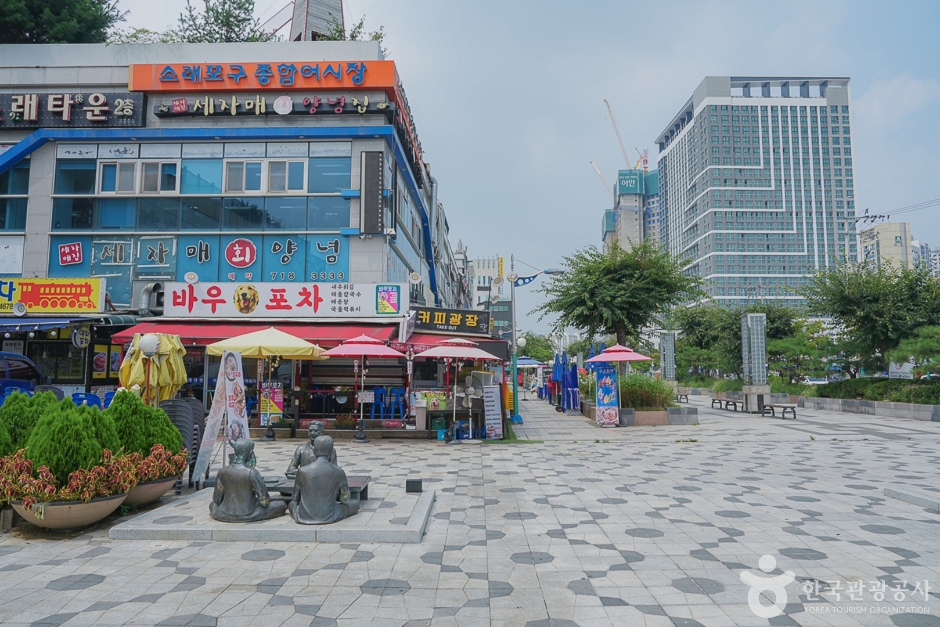
Soraepogu Pocha Street (소래포구 포차거리)
2024-02-15
12 Soraeyeok-ro, Namdong-gu, Incheon
Located just in front of the Sorae Fish Market, Soraepogu Pocha Street comes alive in the evening as a vibrant street filled with food stalls. Visitors are treated to an array of fresh seafood dishes, including daeha sogeum gui (salt-grilled prawn), kkotgejjim (steamed blue crab) and kkotge twigim (fried blue crab). Additionally, patrons have the unique opportunity to purchase hoe (sliced raw fish), directly from the fish market and pair it with the street food offerings.
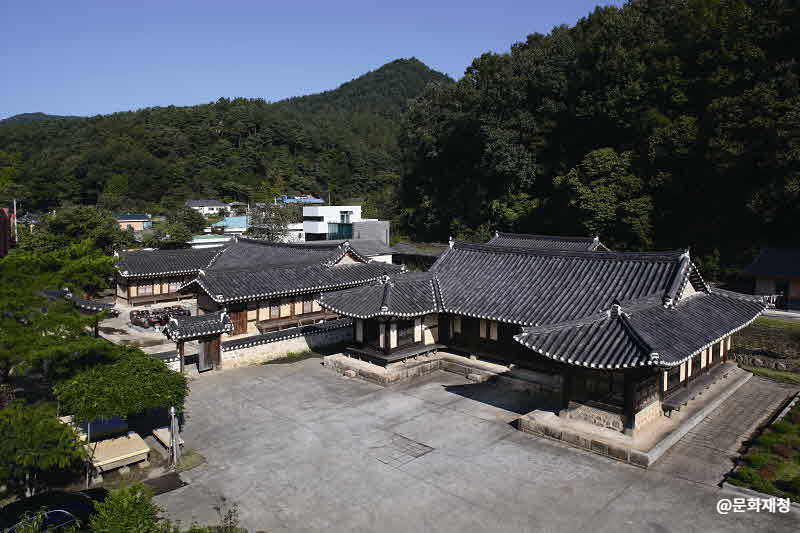
Goesan Historic House of Song Byeong-il (괴산 송병일 고택)
2024-02-15
17 Cheongcheon 4-gil, Cheongcheon-myeon, Goesan-gun, Chungcheongbuk-do
This dwelling is a well-preserved example of a traditional Korean house built in the late 19th century, a relic from the era of the Joseon dynasty. It offers insight into the architectural design of the period as well as the domestic life of the Joseon aristocracy. The house also bears historical significance as the residence of the descendants of Uam Song Siyeol, a prominent Neo-Confucian scholar of the dynasty. The layout features distinct sarangchae (the men's quarter) and anchae (the women's quarter), with a gate and a storage facility for essential supplies situated between them. This set up offers visitors an authentic experience of the Joseon dynasty’s traditional household structures. Encircled by a tranquil forest, this old house transports visitors to a time long past..
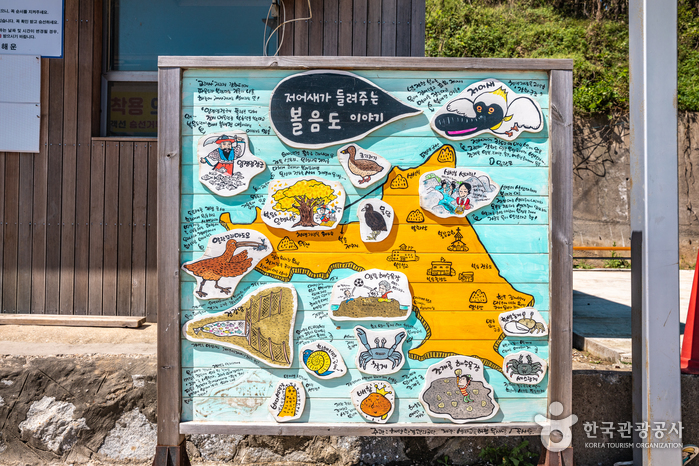
Boreumdo Island (Spoonbill Eco Village) (볼음도(저어새 생태마을))
2024-02-15
595-1 Boreumdo-ri, Seodo-myeon, Ganghwa-gun, Incheon
Boreumdo Island, situated in Seodo-myeon, Ganghwa-gun, is renowned as a habitat for spoonbills. The spoonbill, a rare migratory bird with a global population of around 3,000 individuals, finds refuge on this island. Since 2012, Boreumdo Island has been designated as a protected habitat for spoonbills, offering various experiential programs aimed at fostering an understanding of the tidal flat ecosystem. Key experiences include clam digging, net usage, and mudskipper fishing.

Yeongheungdo Simnipo Beach (영흥도 십리포해변)
2024-02-16
420-26 Yeongheungbuk-ro, Yeongheung-myeon, Ongjin-gun, Incheon
Simnipo Beach, located on Yeongheungdo Island in Incheon, offers stunning views both day and night. To the west of the beach, a rock formation extends outward, while behind it lies a colony of more than 300 hornbeam trees, the largest in Korea. The beach buzzes with activity during daylight hours, but as night falls, the illuminated backdrop of Incheon International Airport and the lights shimmering over the West Sea merge to craft a captivating spectacle.
Incheon Port Cruise Terminal (인천항 크루즈터미널)
2024-02-16
438 Gukjehangman-daero, Yeonsu-gu, Incheon
The Incheon Port Cruise Terminal, which opened its doors in April 2019, serves as a docking point for large cruise ships. It features a two-level structure, with the first floor dedicated to arrivals and the second floor designated for departures. To enhance the experience for travelers arriving by cruise ship, the terminal offers a complimentary shuttle bus service that provides convenient access to major tourist destinations within Incheon. Notable nearby attractions include Incheon Chinatown and Wolmido Island.
Neulsolgil Park (늘솔길공원)
2024-11-08
771 Aenggogae-ro, Namdong-gu, Incheon
Neulsolgil Park, nestled in Nonhyeon-dong, Incheon, is a park designed with nature in mind. The creation of the park focused on preserving the existing forest as much as possible, resulting in a diverse array of forest trails that lead visitors through cypress, metasequoia, ginkgo, and katsura forests. Additionally, the park offers a variety of amenities and playgrounds. Features include a sheep farm, a rose garden, and a forest playground, making it a versatile destination that caters to visitors of all ages.
Aramaru Observatory (아라마루 전망대(아라폭포))
2024-02-15
79-4 Duksil-dong, Gyeyang-gu, Incheon
The Aramaru Observatory, a circular structure perched in the gorge section of Gyeyangsan Mountain, occupies the highest point of the Arabaetgil, a maritime path linking the West Sea with the Hangang River. Renowned for offering the most spectacular vista of the entire Arabaetgil, the observatory features a glass floor that provides a stunning overhead view of the Arabaetgil below. At night, the ambiance is further enhanced by the twinkling lights installed along the railings and floor, creating a mesmerizing atmosphere that captivates visitors.
Bukjeong Village (북정마을)
2024-02-15
132-3 Seongbuk-ro 23-gil, Seongbuk-gu, Seoul
Bukjeong Village, situated along the slopes of Seongbuk-dong, offers a glimpse into Korea's old alleyways. The village expanded as refugees from the Korean War (1950–1953) and people from various regions settled, building houses under the collapsed walls of Hanyang doseong (Seoul City Wall). Presently, the village is home to young artists, and the broad street in front of the village bus stop hosts various community events.
 English
 한국어
한국어 日本語
日本語 中文(简体)
 Deutsch
 Français
 Español
 Русский


